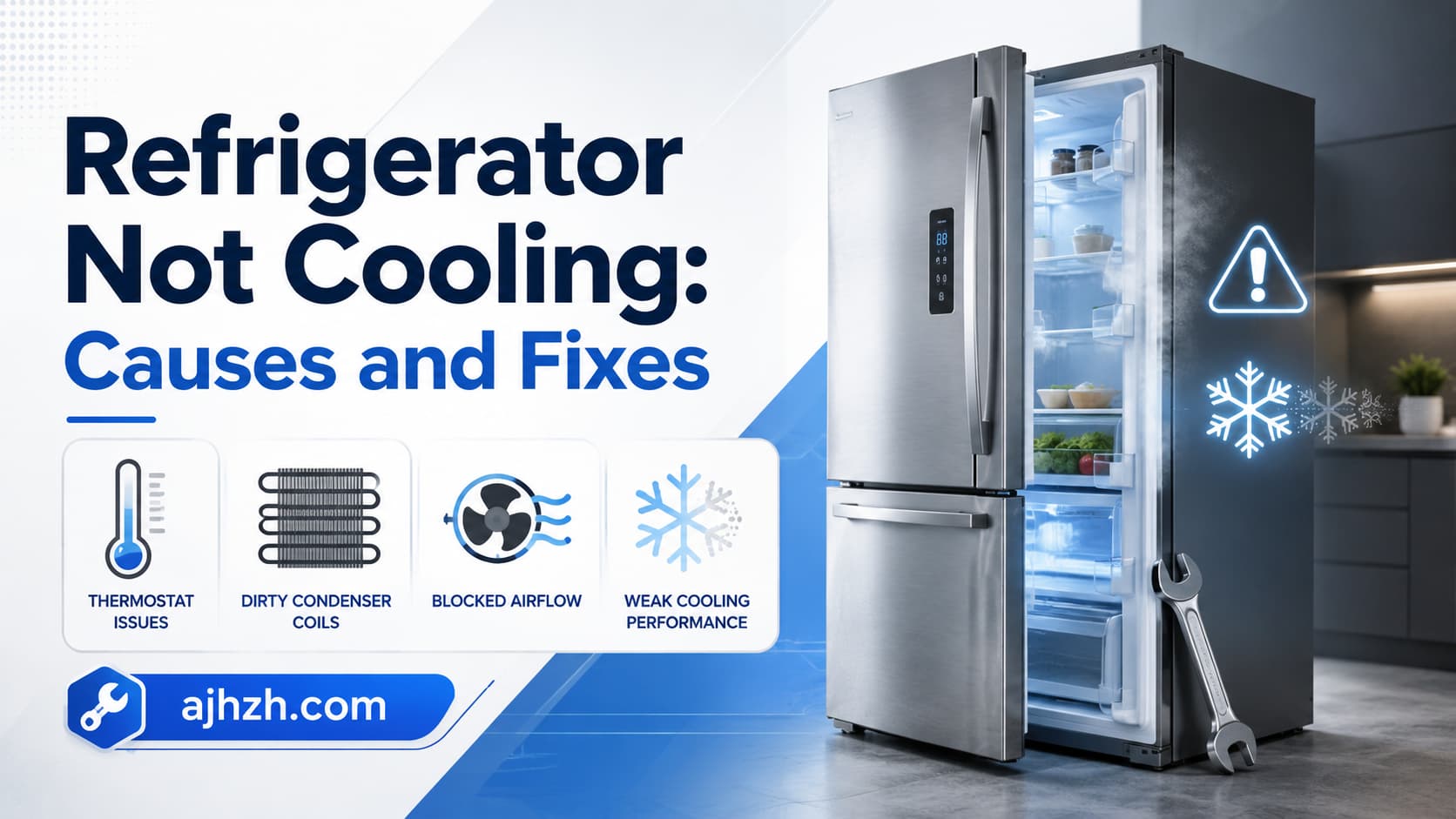
A refrigerator that is running but not cooling is one of the most common home appliance problems. The issue may be simple, such as dirty condenser coils or wrong temperature settings, or more serious, such as a faulty compressor, refrigerant leak, or damaged control board.
The good news is that many refrigerator cooling problems can be checked safely at home before calling a technician. This guide explains the main causes, practical fixes, warning signs, and when professional repair is required.
Why Is My Refrigerator Not Cooling?
A refrigerator cools by removing heat from inside the cabinet and releasing it outside through the condenser coils. If any part of this cooling cycle fails, the fridge may stay warm even if the lights and fan are working.
Common symptoms include:
- Food spoiling faster than usual
- The fridge feels warm but the freezer still works
- The compressor runs constantly
- Ice buildup inside the freezer
- Weak airflow from the vents
- Unusual clicking, buzzing, or humming sounds
Before assuming the refrigerator is broken, start with the simple checks below.
Quick Checks Before Repairing the Refrigerator
1. Check the Temperature Settings
The refrigerator temperature may have been changed accidentally.
Recommended settings:
| Section | Recommended Temperature |
|---|---|
| Refrigerator compartment | 37°F to 40°F / 3°C to 4°C |
| Freezer compartment | 0°F / -18°C |
If the setting is too high, lower it and wait 6 to 12 hours to see if cooling improves.
2. Make Sure the Door Is Closing Properly
A loose or dirty door gasket allows warm air to enter the refrigerator. This makes the compressor work harder and reduces cooling efficiency.
Check for:
- Gaps around the door seal
- Cracks in the rubber gasket
- Food packages blocking the door
- Dirt or grease on the seal
Clean the gasket with warm water and mild soap. If the seal is damaged, it should be replaced.
3. Avoid Overloading the Refrigerator
A refrigerator needs proper airflow to cool evenly. If the vents are blocked by food containers, cold air cannot circulate.
Keep space around the air vents and avoid pushing items directly against the back wall.
Common Causes of a Refrigerator Not Cooling
1. Dirty Condenser Coils
Condenser coils release heat from the refrigerator. When they are covered with dust, pet hair, or kitchen grease, the fridge cannot remove heat efficiently.
Signs of Dirty Condenser Coils
- Refrigerator runs for long periods
- The sides or back feel very hot
- Cooling is weak
- Electricity usage increases
How to Fix It
Unplug the refrigerator and clean the coils using a coil brush or vacuum cleaner. Condenser coils are usually located behind the fridge or underneath it.
Clean the coils every 6 months, especially if you have pets or live in a dusty area.
2. Faulty Evaporator Fan
The evaporator fan moves cold air from the freezer to the refrigerator compartment. If this fan stops working, the freezer may stay cold while the refrigerator becomes warm.
Signs of a Bad Evaporator Fan
- Freezer is cold but fridge is warm
- No airflow from the fridge vents
- Fan noise stops when the door switch is pressed
- Ice buildup near the evaporator area
How to Fix It
Listen for fan noise when the refrigerator door is open and the door switch is pressed. If the fan is silent, blocked by ice, or making a grinding noise, it may need cleaning or replacement.
3. Defective Condenser Fan
The condenser fan cools the compressor and condenser coils. If it fails, the compressor can overheat, and the refrigerator may stop cooling properly.
Common Symptoms
- Refrigerator feels hot near the bottom
- Compressor is very hot
- Fan does not spin
- Loud noise from the back or bottom
Fix
Unplug the fridge and inspect the fan for dust, debris, or obstruction. If the fan blade moves freely but does not run, the fan motor may be faulty.
4. Frost Buildup in the Freezer
Heavy frost can block airflow between the freezer and refrigerator compartment. This often happens when the defrost system fails.
Possible Causes
- Defective defrost heater
- Bad defrost thermostat
- Faulty defrost timer
- Damaged control board
What You Can Do
Turn off the refrigerator for several hours to allow the ice to melt. This may restore cooling temporarily. However, if the frost returns, the defrost system needs proper diagnosis.
5. Faulty Thermostat or Temperature Sensor
The thermostat or temperature sensor tells the refrigerator when to start and stop cooling. If it gives incorrect readings, the compressor may not run when needed.
Signs
- Refrigerator temperature changes randomly
- Compressor does not start
- Fridge is too warm or too cold
- Temperature display is inaccurate
Fix
Try adjusting the thermostat. If there is no response, the thermostat or sensor may need replacement.
6. Compressor Problems
The compressor is the heart of the refrigerator cooling system. It compresses refrigerant and circulates it through the system.
Signs of Compressor Failure
- Clicking sound every few minutes
- Refrigerator does not cool at all
- Compressor is hot but not running
- Burning smell near the back
- Fridge runs but temperature never drops
Fix
Compressor problems usually require a qualified technician. Replacing a compressor can be expensive, so compare the repair cost with the price of a new refrigerator.
7. Low Refrigerant or Refrigerant Leak
Refrigerant is the fluid that absorbs heat inside the refrigerator. If the system has a leak, cooling performance drops.
Warning Signs
- Weak cooling in both fridge and freezer
- Compressor runs continuously
- Ice forms only on part of the evaporator coil
- Cooling becomes worse over time
Fix
A refrigerant leak cannot be fixed by simply adding gas. The leak must be located, repaired, and the system must be recharged correctly by a professional.
8. Faulty Start Relay
The start relay helps the compressor start. If the relay fails, the compressor may click but not run.
Symptoms
- Clicking sound from the back
- Compressor tries to start then stops
- Fridge is warm
- Burning smell near the relay area
Fix
A technician can test the relay with a multimeter. In many cases, replacing the start relay is cheaper than replacing the compressor.
Refrigerator Not Cooling: Cause and Fix Comparison Table
| Problem | Common Sign | Difficulty | Possible Fix |
|---|---|---|---|
| Wrong temperature setting | Fridge slightly warm | Easy | Adjust temperature |
| Dirty condenser coils | Fridge runs constantly | Easy | Clean coils |
| Door seal problem | Moisture or warm air inside | Easy | Clean or replace gasket |
| Blocked air vents | Uneven cooling | Easy | Rearrange food |
| Evaporator fan failure | Freezer cold, fridge warm | Medium | Replace fan motor |
| Frost buildup | Ice behind freezer panel | Medium | Check defrost system |
| Start relay failure | Clicking sound | Medium | Replace relay |
| Compressor failure | No cooling at all | Hard | Professional repair |
| Refrigerant leak | Cooling gets weaker over time | Hard | Leak repair and recharge |
Pros and Cons of Repairing a Refrigerator
Advantages
Lower Cost Than Replacement
Many refrigerator problems, such as dirty coils, damaged door seals, or faulty fans, are cheaper to repair than buying a new unit.
Longer Appliance Life
Fixing small problems early can extend the life of the refrigerator and prevent major breakdowns.
Better Energy Efficiency
A well-maintained refrigerator uses less electricity and cools more effectively.
Less Food Waste
Restoring proper cooling helps protect food from spoiling.
Disadvantages
Some Repairs Can Be Expensive
Compressor replacement, refrigerant leaks, and control board issues may cost a lot.
Temporary Fixes May Not Last
Defrosting the fridge may solve the problem for a few days, but if the defrost system is faulty, the issue will return.
Older Refrigerators May Not Be Worth Repairing
If the refrigerator is very old and the repair cost is high, replacement may be a better option.
Professional Diagnosis May Be Required
Some problems need electrical testing, sealed system repair, or special tools.
When Should You Call a Technician?
You should call a professional refrigerator repair technician if:
- The compressor is not starting
- There is a repeated clicking sound
- The fridge is not cooling after basic checks
- Frost keeps returning after defrosting
- You suspect a refrigerant leak
- The control board may be faulty
- There is a burning smell
- The refrigerator trips the circuit breaker
Do not attempt sealed system repairs or electrical component replacement unless you are trained.
How to Prevent Refrigerator Cooling Problems
Regular maintenance can prevent many cooling issues.
Useful Maintenance Tips
- Clean condenser coils every 6 months
- Keep the door gasket clean
- Do not overload the refrigerator
- Leave space behind the fridge for ventilation
- Keep food away from air vents
- Check the temperature regularly
- Replace damaged door seals quickly
- Avoid opening the door too often
Good airflow and clean coils are two of the most important factors for stable refrigerator performance.
FAQ
Why is my refrigerator running but not cooling?
This usually happens because of dirty condenser coils, a faulty fan, blocked air vents, a bad thermostat, compressor failure, or low refrigerant. Start with simple checks such as temperature settings, door seals, and coil cleaning.
Why is my freezer cold but the refrigerator is warm?
This often means cold air is not moving properly from the freezer to the refrigerator section. The cause may be a faulty evaporator fan, blocked air vents, or frost buildup.
How long should I wait after changing the temperature setting?
Wait at least 6 to 12 hours after adjusting the temperature. A refrigerator needs time to stabilize, especially after being opened frequently or filled with warm food.
Can dirty coils stop a refrigerator from cooling?
Yes. Dirty condenser coils reduce heat transfer and make the compressor work harder. If the coils are very dirty, the refrigerator may become warm and consume more electricity.
Is it worth repairing a refrigerator compressor?
It depends on the refrigerator’s age, brand, and repair cost. If the refrigerator is old and the compressor repair is expensive, buying a new unit may be more practical.
What is the first thing to check when a refrigerator is not cooling?
Start with the temperature setting, power supply, door seal, blocked vents, and condenser coils. These are simple checks that may solve the problem without major repair.
Conclusion
A refrigerator not cooling can be caused by anything from a simple airflow issue to a major compressor or refrigerant problem. The best approach is to start with basic checks: temperature settings, door gasket, blocked vents, and dirty condenser coils. These issues are easy to inspect and often solve the problem.
If the refrigerator still does not cool after basic maintenance, the fault may be related to the fan motor, defrost system, start relay, compressor, or refrigerant circuit. In that case, professional diagnosis is the safest and most reliable option.
Keeping your refrigerator clean, well-ventilated, and properly loaded can improve cooling performance, reduce electricity usage, and extend the appliance’s lifespan.

