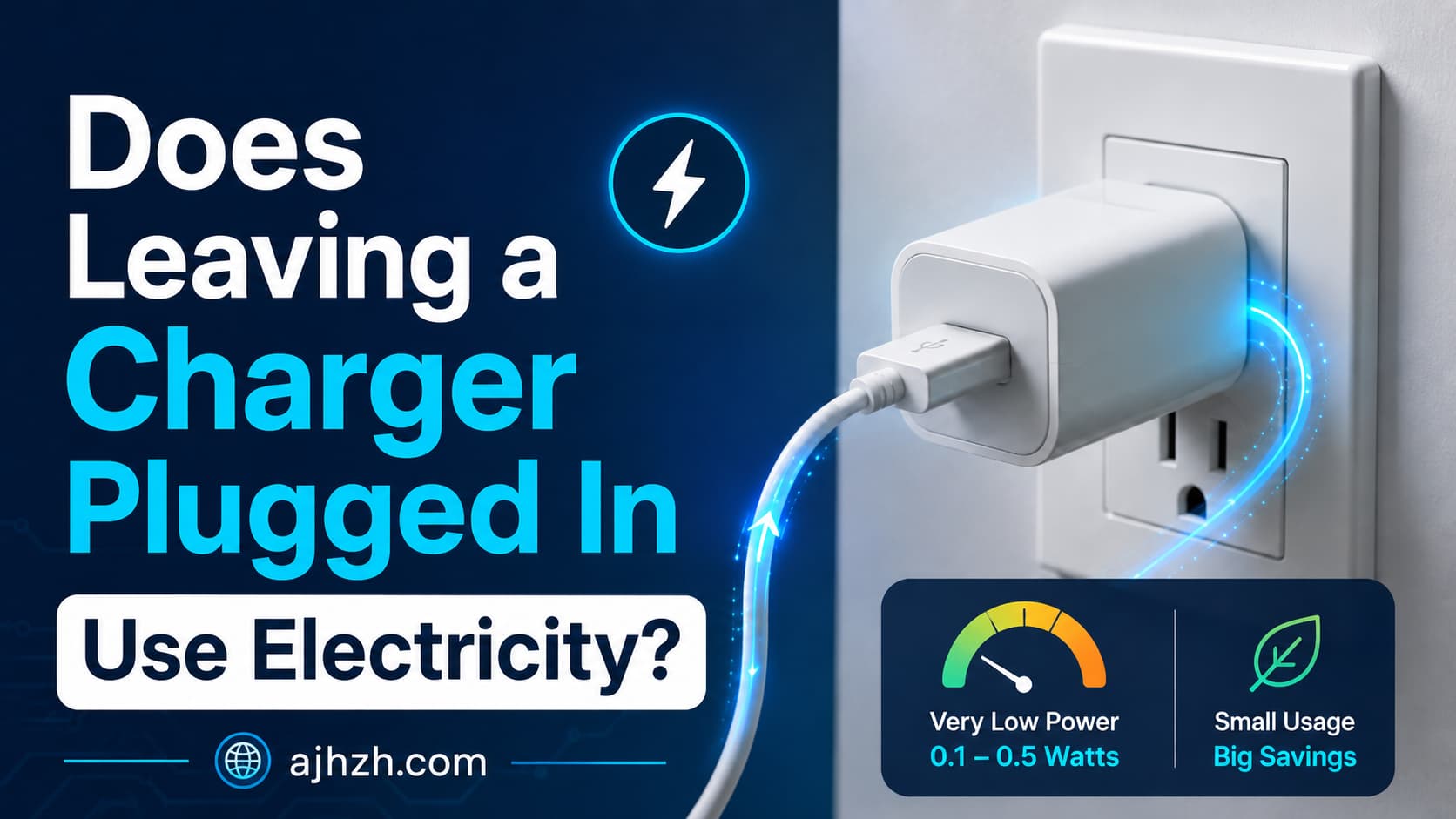
Yes, a charger can still use a small amount of electricity when it is plugged into the wall, even if no phone, laptop, tablet, or device is connected.
This is called standby power or vampire power.
Modern chargers are much more efficient than older ones, so the amount of electricity they consume while idle is usually very small. However, if you leave many chargers plugged in all day, every day, the wasted power can slowly add up over time.
Why Does a Plugged-In Charger Consume Power?
A charger is not just a simple cable. Inside it, there are small electronic components that convert electricity from your wall outlet into a lower voltage suitable for your device.
Even when your phone or laptop is not connected, some parts inside the charger may remain active.
Main reasons include:
- The charger is ready to detect a connected device.
- Internal circuits stay slightly powered.
- Some fast chargers keep control components active.
- Older or low-quality chargers may waste more energy.
In simple words:
If the charger is plugged into the wall, it may still be doing a tiny amount of work.
How Much Electricity Does an Idle Charger Use?
The electricity used by an idle charger is usually very low.
A modern phone charger may use only a tiny fraction of a watt when nothing is connected. Older chargers, cheap chargers, or large laptop adapters may consume more.
Charger Electricity Use Comparison
| Charger Type | When Device Is Not Connected | Energy Waste Level | Notes |
|---|---|---|---|
| Modern phone charger | Very low | Low | Usually highly efficient |
| Fast charger | Low to moderate | Low | May use slightly more than basic chargers |
| Laptop charger | Low to moderate | Medium | Larger adapter, higher capacity |
| Old charger | Moderate | Higher | Less efficient design |
| Cheap unbranded charger | Unpredictable | Higher risk | May waste power or overheat |
Is Leaving a Charger Plugged In Expensive?
For one charger, the cost is usually very small.
Leaving a single modern phone charger plugged in for a full year may only add a small amount to your electricity bill. The cost becomes more noticeable when you have many chargers plugged in across your home, such as:
- Phone chargers
- Laptop chargers
- Tablet chargers
- Smartwatch chargers
- Power bank chargers
- Gaming device chargers
The real issue is not one charger.
The problem is the combined standby power from many devices and adapters.
Is It Dangerous to Leave a Charger Plugged In?
In most cases, a high-quality charger from a trusted brand is safe to leave plugged in.
However, there are still some risks, especially with poor-quality chargers.
Possible risks include:
- Overheating
- Electrical faults
- Damage from power surges
- Fire risk from fake or damaged chargers
- Shorter charger lifespan
If the charger feels hot, makes noise, smells strange, or has visible damage, you should stop using it immediately.
Pros and Cons of Leaving a Charger Plugged In
Advantages
- Convenient and ready to use
- Saves time when charging frequently
- Useful near a desk, bed, or work area
- No need to search for the charger every time
Disadvantages
- Uses a small amount of electricity
- May shorten charger lifespan over time
- Can increase clutter around outlets
- Low-quality chargers may become unsafe
- Adds to total household standby power
Should You Unplug Your Charger?
Yes, it is better to unplug your charger when you are not using it, especially if you want to save energy and improve safety.
You do not need to worry too much about one modern charger, but unplugging unused chargers is still a good habit.
You should unplug your charger when:
- You are leaving home for a long time
- The charger is cheap or unbranded
- The charger becomes warm while idle
- The charger is old or damaged
- You want to reduce electricity waste
- You have many chargers plugged in at once
Does a Charger Use Power When the Phone Is Fully Charged?
Yes, but only a small amount.
When your phone reaches 100%, modern smartphones usually reduce or stop the charging process. However, the charger and phone may still use small amounts of energy to maintain the battery level.
This is why leaving your phone plugged in overnight does not usually consume a lot of electricity, but it may still create heat and affect battery health over the long term.
How to Reduce Charger Electricity Waste
Use a power strip with a switch
This is one of the easiest solutions. You can turn off multiple chargers with one button.
Unplug chargers you do not use daily
Chargers for tablets, power banks, cameras, or spare phones do not need to stay plugged in all the time.
Buy certified chargers
Use chargers from trusted brands or certified manufacturers. They are usually safer and more efficient.
Avoid fake fast chargers
Cheap fast chargers may waste more power and can be unsafe.
Keep chargers in a cool place
Heat reduces charger efficiency and may shorten its lifespan.
Common Signs of a Bad Charger
A charger should not become very hot when it is not charging anything.
Replace your charger if you notice:
- Burning smell
- Buzzing sound
- Loose plug
- Cracked body
- Extremely hot surface
- Slow or unstable charging
- Sparks when plugged in
A damaged charger is not worth the risk.
FAQ
Does leaving a phone charger plugged in use electricity?
Yes. A plugged-in phone charger can use a very small amount of electricity even when no phone is connected.
Is it bad to leave a charger plugged in all the time?
For a high-quality charger, it is usually not dangerous. However, unplugging it is safer and reduces wasted electricity.
Does a laptop charger use electricity when not connected to a laptop?
Yes. A laptop charger can still draw a small amount of power when plugged into the wall, even without the laptop connected.
Can leaving a charger plugged in cause a fire?
A good-quality charger is usually safe, but damaged, fake, or low-quality chargers can be dangerous and may overheat.
Should I unplug my charger at night?
It is a good habit, especially if the charger is old, cheap, or not being used. For safety and energy saving, unplugging is better.
Does a fast charger use more electricity when idle?
Some fast chargers may use slightly more standby power than basic chargers, but modern certified fast chargers are generally efficient.
Final Verdict
Leaving a charger plugged in does use electricity, but the amount is usually very small with modern chargers. Still, unplugging unused chargers is a smart habit because it reduces energy waste, improves safety, and may help your charger last longer.
For one charger, the difference may be tiny.
For many chargers across your home, the savings and safety benefits become more meaningful.
Best advice: use high-quality chargers, avoid fake adapters, and unplug chargers when you do not need them.